Selling Your Hartford House When You're Moving Away
People leave the Hartford area for all sorts of reasons. A job offer in another state, a transfer inside one of the big local employers like The Hartford, Travelers, CVS Health's Aetna offices, Pratt & Whitney in East Hartford, or UConn Health in Farmington. Military orders. A parent who needs help three states away. Whatever the reason, the house doesn't move with you, and selling it on someone else's schedule is a different job from an ordinary sale. If the move is part of a separation, our page on selling the house during a Connecticut divorce covers the court side of it.
Below is how we think about a relocation sale: whether you are still living in the house or already gone, what an empty house really costs you each month, how to compare an employer buyout, and how a Connecticut closing works when you are signing from somewhere else.
Are You Still There, or Already Gone?
Still living in the house
This is the easier position. You can match the closing to your moving truck, stay in the house until the last week, and use the proceeds for the deposit on the next place. The risk is timing two moving parts at once. If you list, a buyer's mortgage commitment can slip, an inspection can reopen the price, and you may find yourself paying rent in the new city while still paying the Hartford mortgage. With a cash sale you pick the date up front. If you want room to breathe, we can set it weeks out. If you need it fast, here is what a seven-day Connecticut closing looks like.
Already moved out
This is where relocation sales get expensive. You are trusting an agent you have never met, approving showings by text, paying someone to mow in July and plow in February, and keeping the heat on so the pipes don't freeze, all on a house nobody is living in. Every month it sits is another mortgage payment, another installment to the town tax collector, and another insurance premium. We buy houses in that position all the time, and you never have to fly back. See how we buy houses in Hartford from owners who are already working somewhere else.
Add Up What the Empty House Costs You
We would rather you run your own numbers than trust a range off a website. Pull up your statements and fill in the monthly figure for each line:
- Mortgage: principal, interest, and escrow, straight from your statement.
- Property tax: Connecticut has no county tax, so this is the town bill, based on the assessor's value and the town's mill rate. Divide your annual bill by twelve.
- Insurance: many homeowner policies restrict coverage once a house has been vacant for a set period, often 60 days. Call your agent and ask what your policy says and what a vacancy endorsement costs.
- Heat and utilities: oil, gas, or electric heat has to stay on all winter, plus electric and water.
- Outside work: lawn care in season, snow and ice removal in winter.
- Trips and surprises: flights back, a plumber after a leak, a locksmith after a break-in.
Multiply the total by the months a listing usually takes from the first showing to the closing table, then add the agent's commission. Compare that with a cash number that ends the bills on the closing date. Some sellers still come out ahead listing. Many, once they see the total, don't.
Employer Buyout Offers: How to Compare Them
Some relocation packages include a guaranteed buyout, where a relocation management company hired by your employer offers to buy the house. The company typically orders independent appraisals and bases the offer on them, and the house then goes back on the market. The appeal is certainty. The catch is that the number can come in below what the house would bring, and the package may set a short window to accept.
- Ask your relocation counselor how the offer is calculated, which costs are deducted, and how long you have to decide.
- Find out whether the package pays anything if you sell on your own instead, such as a bonus for an outside sale.
- Get a second number before the deadline. A free cash offer from us gives you something to compare, and you are under no obligation to take it.
Closing From Another State
Connecticut real estate closings are run by attorneys, and they are used to sellers who have left. There are three common ways to sign without coming back:
- Sign in front of a notary where you live now. The closing attorney sends the deed and other papers by overnight courier, you sign before a local notary, and you send them back.
- Remote online notarization. Connecticut's remote notarization law, Public Act 23-28, took effect October 1, 2023. It lets a Connecticut notary notarize your signature over a live audio-video connection, if the closing attorney and title insurer accept it for your deed.
- Power of attorney. You can name someone you trust in Connecticut to sign for you. It needs to meet the Connecticut Uniform Power of Attorney Act (Conn. Gen. Stat. §1-350 and following), and a power of attorney used to sell land is generally recorded with the town clerk along with the deed.
However you sign, your net proceeds can be wired to your bank, so nobody has to mail you a check.
Military Moves Out of the Capitol Region
Bradley Air National Guard Base in East Granby is home to the Connecticut Air National Guard's 103rd Airlift Wing, the "Flying Yankees," and the Connecticut Army National Guard has facilities around the region. Naval Submarine Base New London is in Groton, about an hour away. When PCS orders arrive, the report date doesn't move, so the house sale has to fit around it.
- VA loans: when a VA-backed mortgage is paid off in a sale, you can generally ask the VA to restore that entitlement for a future purchase. A buyer assuming your VA loan is a separate process that needs VA approval.
- The home sale exclusion: the federal exclusion of gain on a main home normally requires two years of use in the five years before the sale. Service members on qualified official extended duty can elect to suspend that five-year window for up to ten years. Ask a tax preparer how it applies to your dates.
- Timing: a closing date you control lets you sign before you leave, or after, by notary or power of attorney.
Taxes to Know Before You Leave Connecticut
At closing the seller pays Connecticut's real estate conveyance tax, a state portion plus a municipal portion, and your attorney prorates the town property tax with the buyer. If you have a gain that isn't covered by the federal home sale exclusion, Connecticut taxes it as ordinary income under its graduated rates, which currently run from 2% to 6.99%. Because the house is in Connecticut, that applies even after you move. A tax preparer can tell you whether any of it applies to you; for most long-time owners selling a main home, the federal exclusion covers the gain.
Why People Moving Away Call Us
You set the date, anywhere from a week to a couple of months out. We buy the house as it is, so there is nothing to fix, paint, or stage, and you can leave behind whatever doesn't fit on the truck. You can do the whole thing from your new address. We buy across the region, from a colonial in West Hartford to an older two-family in Norwich, and you can read reviews from people who sold to us before you call. Reach us at (860) 703-9997 and you'll have a written offer within 24 hours.
Useful Contacts for Movers and Military Families
Military OneSource
(800) 342-9647 · militaryonesource.mil
Free PCS and relocation help for service members and families.
CT Department of Veterans Affairs
portal.ct.gov/dva
State benefits and services for Connecticut veterans.
VA Home Loans
va.gov home loans
Entitlement restoration and loan assumption rules.
CT Department of Revenue Services
portal.ct.gov/DRS
Conveyance tax and Connecticut income tax for part-year and nonresident filers.
Moving Soon? Get Your Number First
Tell us where the house is and when you need to be gone. We'll send a written cash offer you can compare with a listing or a relocation buyout.
One of Our Recent Purchases
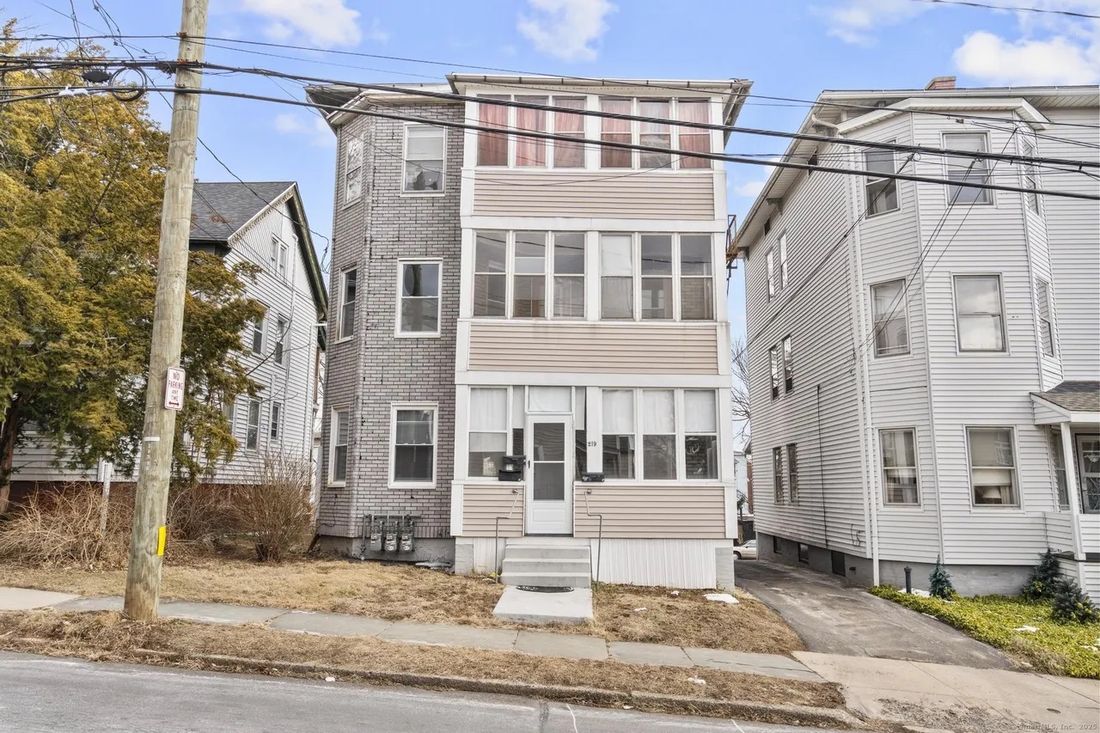
This New Britain building is one we bought ourselves. The project page walks through what was wrong with it and how we handled it.