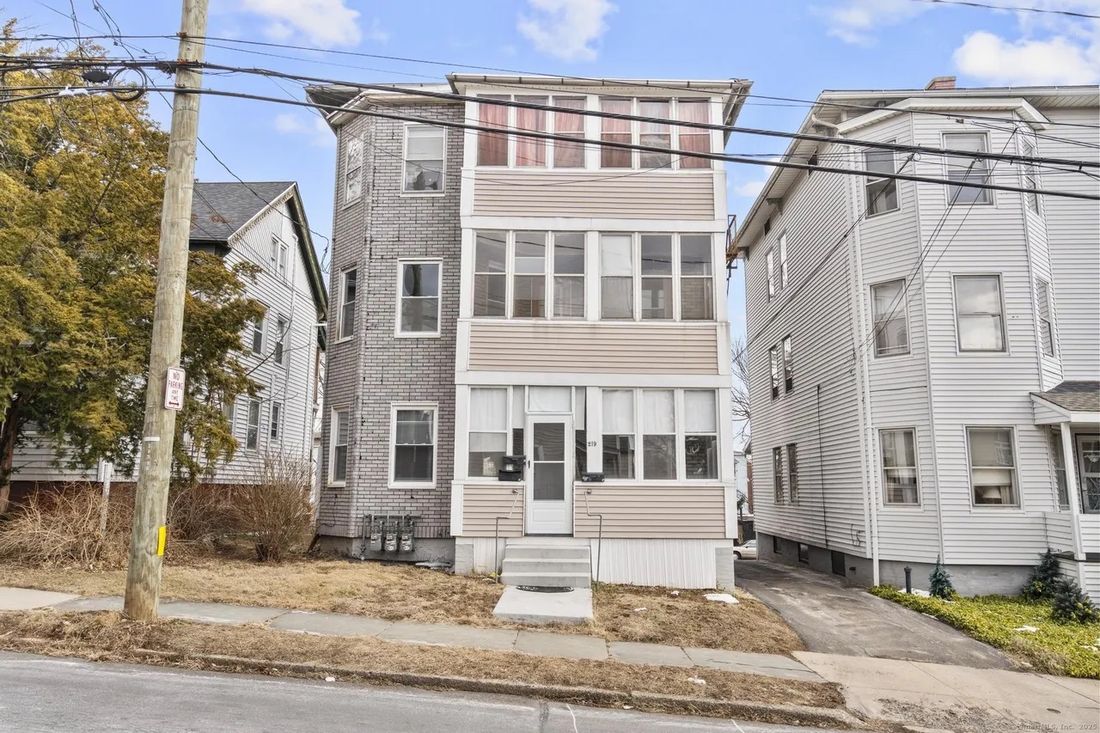
Selling an Inherited House in Connecticut: Probate, the Estate Tax Lien, and Your Options
When a parent or relative dies and leaves a house in the Hartford area, the family usually ends up with three jobs at once: grieving, sorting out the estate, and deciding what to do with a property that keeps costing money every month. Many heirs live out of state. Some can't agree. Some just don't want a landlord's life or a renovation project. A sale is often the answer, but in Connecticut the house can't be sold until the probate court has given the right person the authority to sign and the estate tax paperwork is in order.
This page walks through those steps the way Connecticut actually does them, in plain language, so you know what to ask the court and your attorney and when a buyer like us can step in.
Does the House Have to Go Through Probate?
It depends on how the deed was held on the day of death.
- Joint ownership with right of survivorship: the surviving owner already owns the house. No probate sale is needed, though the house still has to be reported on the Connecticut estate tax return and the lien released (more on that below).
- Owned by a trust: if the house was deeded into a living trust, the successor trustee sells it under the trust's terms rather than through a probate sale.
- Solely owned, or owned as tenants in common: the house is a probate asset. Someone has to be appointed executor (if there is a will) or administrator (if there isn't) before it can be sold.
- Small estates: Connecticut's simpler small estate affidavit is only for estates of $40,000 or less that don't include real estate. If a solely owned house is involved, expect a regular probate case.
The Probate Steps That Matter for a Sale
- Open the estate. The original will, if there is one, goes to the probate court for the district where the person lived. Connecticut law requires whoever has it to deliver it within 30 days of the death. The petition asks the court to admit the will and appoint a fiduciary.
- Get the fiduciary's probate certificate. Once appointed, the executor or administrator receives a Fiduciary's Probate Certificate from the court. That certificate is the proof a closing attorney and title insurer will want to see.
- Record notice on the land records. If the estate owns Connecticut real estate, the fiduciary records the court's Notice for Land Records/Appointment of Fiduciary (form PC-251) with the town clerk where the house sits, within two months of appointment.
- File the inventory. Also within two months, the fiduciary files an inventory listing the house at its fair market value on the date of death. The court allows several ways to value it, including an appraisal, an agent's market analysis, or the actual price from an arm's-length sale within six months of the death.
- Notice to creditors. The court publishes a notice to creditors. Creditors generally have at least 150 days to present claims, and the fiduciary can shorten that for known creditors with a certified-mail notice giving them at least 90 days. Debts and expenses are paid from the estate, often out of the sale proceeds at closing.
- Get permission to sell, if needed. A fiduciary needs the probate court's permission to sell real estate unless the will specifically gives that power. Without it, the fiduciary files a Petition to Sell or Mortgage Real Property (PC-400), usually with a copy of the signed sales contract and evidence of value, and the court decides after notice and, where required, a hearing.
- Close. The executor or administrator signs the deed. The mortgage, any town tax liens, and closing costs come off the top, and the net goes to the estate account to be distributed under the will or Connecticut's intestacy law.
The Connecticut Estate Tax Return and the Release of Lien
Connecticut has no inheritance tax. It does have an estate tax, and even estates that owe nothing have paperwork to file, because Connecticut places a lien on the decedent's real estate for the estate tax until it is released. A buyer's title insurer will want that release before closing.
- Nontaxable estates: for deaths in 2026, the Connecticut exemption is $15 million. An estate under it files Form CT-706 NT with the probate court. If the judge agrees no tax is due, the court issues a written opinion of no tax and a certificate releasing the lien on the real estate.
- Taxable estates: an estate over the exemption files Form CT-706/709 with the Department of Revenue Services and a copy with the probate court. Connecticut taxes the amount over the exemption at 12%, and in that case only DRS can release the lien.
- Timing: the return is due six months after the date of death. The probate court can grant one extension of up to six months for a CT-706 NT if you ask before the deadline.
- Survivorship property counts too: a release is needed for each piece of Connecticut real estate on the return, including a house that passed to a surviving joint owner outside of probate.
- Probate fees: Connecticut probate court fees are set by statute and based largely on the size of the estate. They are also secured by a lien on the real estate until paid, and the court can issue a release for that as well.
None of this is unusual. Your estate attorney will normally handle it, and we are happy to set the closing for after the releases are recorded.
When the Heirs Don't Agree
The hardest part of most estate sales is not the house. It is three siblings with three plans: one wants to sell now, one wants to fix it up first, and one in another state hasn't answered in a month. Meanwhile the town tax bill, the heat, the insurance, and the lawn keep costing money. If the taxes or mortgage were already behind, the estate may also be facing a town tax lien and tax sale or a foreclosure; a sale that closes first usually pays those off from the proceeds.
A cash offer can settle the argument because it takes the costly options off the table. Nobody has to fund repairs or clean out the house, and there is no buyer's mortgage to wait on. The fiduciary signs, the estate is paid, and each heir receives a share. It works the same way as any as-is sale in Connecticut, except the executor or administrator signs for the estate. Executors and administrators are also exempt from Connecticut's residential condition report under §20-327b, which helps when nobody in the family lived in the house recently. Before the estate signs with any of the cash home buyers in Hartford, the fiduciary should see proof of funds and know which attorney represents the buyer; our checklist covers both.
Taxes Heirs Ask Us About
| Tax | Does It Apply? | The Short Answer |
|---|---|---|
| Connecticut inheritance tax | No | Connecticut's old succession tax was phased out years ago. Heirs pay nothing to the state for receiving property. |
| Connecticut estate tax | Return yes, tax rarely | Every estate files a return. Tax is due only above the exemption ($15 million for 2026 deaths), at 12%. |
| Federal estate tax | Only very large estates | The federal exclusion is also $15 million for 2026. |
| Income tax on the sale | Only on gain above the stepped-up basis | Federal capital gains rules apply; Connecticut taxes any gain as ordinary income at 2% to 6.99%. |
Tax rules change and every estate is different, so confirm the details with a Connecticut estate attorney or CPA before you file anything.
Heirs Who Live Out of State
Many inherited Hartford-area houses belong to people who moved away long ago. Running an empty house from a distance is expensive and stressful:
- Homeowner policies often limit coverage once a house sits vacant, so the estate may need a vacancy policy.
- The town keeps billing property tax at its mill rate, due to the tax collector on schedule.
- The heat has to stay on through a Connecticut winter or the pipes can freeze.
- Someone has to mow in summer and clear snow in winter.
- An empty house invites break-ins and stolen copper.
- Every cleanout, showing, or repair visit is another trip.
We can buy without anyone flying in. The fiduciary can sign before a notary at home, and the Connecticut closing attorney handles the rest. We buy houses still full of furniture and clear them after closing.
Why Executors and Families Call Us
We buy inherited houses across the region, including Hartford, West Hartford, Wethersfield, Newington, East Hartford, New Britain, Bristol, and Norwich and New London County, where our office is. We work with the estate's attorney, we can sign a contract that is subject to probate court approval when the will doesn't give a power of sale, and we will wait for the fiduciary's certificate and the lien releases before we close. If the family home is in the city, see how we buy houses in Hartford. Call Frank or Larry at (860) 703-9997 to talk it through, with no obligation.
Where to Get Help With a Hartford-Area Estate
Hartford Probate Court
250 Constitution Plaza, Hartford, CT 06103 · (860) 757-9150
Estates of Hartford residents. Other towns: use the court locator at ctprobate.gov.
CT Department of Revenue Services
portal.ct.gov/DRS
Forms CT-706 NT and CT-706/709, and lien releases for taxable estates.
Greater Hartford Legal Aid
(860) 541-5000 · ghla.org
Free civil legal help for eligible low-income residents.
Hartford County Bar Association Lawyer Referral Service
(860) 525-6052
Referrals to probate and estate attorneys.
Settling an Estate With a House In It?
A written cash offer helps the executor, the heirs, and the court see the numbers. We can time the closing around the probate steps.
A Property We Bought Nearby
Estates often come with title loose ends. This New Britain purchase had several, and the project page explains how each one was cleared.