Selling a Marital Home in Connecticut Divorce: What You Need to Know
For most couples we talk to in Hartford, the house is the largest thing they own together and the hardest thing to divide. You can split a bank account down to the penny. You cannot split a colonial in Wethersfield or a two-family off Franklin Avenue, so somebody has to keep it, or it has to be sold. This page explains how a Connecticut Superior Court actually treats the family home, what the paperwork looks like when you sell during a pending case, and where a quick cash sale fits.
Two things are worth knowing from the start. First, Connecticut does not use a fixed formula. Under Conn. Gen. Stat. §46b-81 the judge can assign all or part of either spouse's estate to the other, which is why lawyers call Connecticut an "all-property" state. Second, the court has real power over the house itself. The same statute lets a judge pass title to one spouse, to a third person, or order the property sold, and a recorded decree transfers title as if the owners had signed a deed themselves.
Where Hartford Divorces Are Heard
Divorce in Connecticut is a Superior Court family matter. If you or your spouse live in Hartford or one of the towns assigned to the Hartford Judicial District, the case is handled at the family courthouse at 90 Washington Street in Hartford, across the street from the civil courthouse at 95 Washington. Some towns in Hartford County belong to a different judicial district (New Britain, for example, has its own), so check the Judicial Branch's town list before you file anything. The Court Service Center inside the courthouse can help self-represented parties find the right forms.
A few dates shape how fast a house sale can fit into the case. Connecticut requires a waiting period of 90 days from the return date before a divorce judgment can enter, and contested cases with real estate in them usually run much longer. The state's quicker "nonadversarial" joint petition under §46b-44a is not open to couples where either spouse has an interest in real property, so if you own a home together you are on the regular family docket.
Automatic Orders: Why You Both Have to Sign
The day a divorce complaint is served, Connecticut's Automatic Orders (Practice Book §25-5) take effect. Among other things they bar either spouse from selling, transferring, encumbering, or concealing property without the other spouse's written consent or a court order. For the house, that means no secret listing, no new home equity line, and no quiet transfer to a relative. It also means a sale is entirely possible during the case as long as both of you agree in writing or the judge approves it.
Separately, under §46b-83 the court can give one spouse exclusive use of the family home while the case is pending. That order controls who lives there. It does not change who owns it or who has to sign the deed.
Three Ways the House Usually Gets Resolved
One spouse keeps it and buys the other out
The spouse who stays has to refinance the mortgage into their own name and pay the other side their share of the equity, usually figured from an appraisal both attorneys accept. The math has to work on one income now, and with Hartford-area property taxes and oil or gas heat in an older house, that can be harder than it looks. If the refinance can't close, the agreement often falls back to a sale anyway, just months later.
Both keep it for a while
Some agreements let a parent stay in the home with the children until a set date, such as the youngest child finishing school, and then sell and divide the proceeds by a formula written into the judgment. It keeps the kids in the same school and neighborhood. The cost is that both names stay on the mortgage and the deed, and two people who are no longer married have to keep agreeing about the roof, the furnace, and the tax bill for years.
Sell now and divide the money
A sale converts the house into a number. The mortgage is paid off at closing, the closing attorney holds or splits the net proceeds exactly as your agreement or court order says, and neither of you is tied to the property afterward. The usual objection is time: a listed house needs repairs, staging, showings, and a financed buyer who might back out. A cash sale to us skips most of that.
How a Divorce Sale With Simply Sold RE Works
We are happy to talk to one of you, both of you, or your lawyers. We share the same information with both sides.
We see the house once, at a time arranged around whoever is living there, and send a written cash offer within 24 hours.
Because of the Automatic Orders and the deed, both owners sign the purchase agreement. We build in time for each lawyer to read it.
We can close in days, or hold the date until a hearing or the settlement is signed.
The mortgage is satisfied at the table, which takes it off both credit reports, and the money goes where the agreement or order directs.
Conveyance Tax and Capital Gains in a Divorce Sale
When a Connecticut house sells, the seller pays the real estate conveyance tax: a state portion plus a municipal portion that goes to the town. The rate depends on the price and the town, and your attorney files the return at closing. Connecticut's conveyance tax statute, §12-498, exempts deeds between spouses, so a buyout where one spouse deeds their share to the other does not trigger it. A sale to an outside buyer does. When you sell to Simply Sold RE, we pay the closing costs, so you are not writing a check for them.
On the federal side, a married couple can usually exclude up to $500,000 of gain on a main home, and a single owner up to $250,000, if the ownership and two-year use tests are met. Federal law also lets a spouse who moved out count the time the other spouse lived in the house under a divorce or separation instrument. If the house has gone up a lot in value, ask a tax preparer whether to sell before or after the judgment enters.
If One of You Won't Agree to Sell
Inside a pending divorce, the judge can decide the house's fate as part of the property orders, including ordering a sale. Outside a divorce, co-owners who can't agree can bring a partition action under Conn. Gen. Stat. §52-495, and for a single house the court almost always orders a partition by sale under §52-500 rather than dividing the land. Either route puts a stranger, the court or a court-appointed committee, in charge of price and timing, and the extra legal fees come out of the same equity you are dividing. A negotiated sale, even a reluctant one, nearly always leaves both people with more.
When Only One Name Is on the Mortgage
This comes up constantly. The person on the note is the one the lender can pursue, but the deed is what decides who signs at closing. If both of you are on the deed, both of you sign, whatever the loan says. If only one of you is on the deed, the house can still be marital property under §46b-81, and the Automatic Orders still apply, so the other spouse's written consent or a court order is still needed. Either way, the mortgage is paid from the sale price before anyone receives a dollar.
Quitclaim Deeds in a Buyout
If one spouse keeps the house, the other usually signs a quitclaim deed giving up whatever interest they hold, and the deed is recorded with the town clerk in the town where the house sits. Don't sign it until the refinance has closed and the old mortgage is paid, or you can end up off the title but still on the loan. A sale to us is different: both of you convey to us at the same closing, and the mortgage disappears that day.
Keeping the House From Losing Value During the Case
Bitter cases sometimes turn the house into a weapon. Repairs get skipped, the heat goes off in a vacant house in January, or a spouse stops paying the tax bill to the town collector. The Automatic Orders already prohibit wasting marital assets, and your attorney can ask the court for further orders if it is happening. A signed purchase agreement also helps: once the house is under contract, there is a closing date, a price, and a closing attorney holding the money, which leaves much less room for games.
Help for Hartford-Area Spouses
Hartford Family Court
Superior Court, Hartford Judicial District, 90 Washington St, Hartford, CT 06106
jud.ct.gov for forms, the town list, and the Court Service Center.
Greater Hartford Legal Aid
(860) 541-5000 · ghla.org
Free civil legal help for eligible low-income residents of the region.
Hartford County Bar Association Lawyer Referral Service
(860) 525-6052
Connects you with a local family law or real estate attorney.
CT Safe Connect
Call or text (888) 774-2900 · ctsafeconnect.org
Connecticut's free, confidential 24/7 line for anyone dealing with domestic violence. National line: 1-800-799-7233.
Why Divorcing Couples Call Us
We buy houses across Hartford and the surrounding towns, and a good share of the calls we get start with "we're separating." We don't take sides, we don't need the two of you in the same room, and we put everything in writing so both attorneys see the same terms. We buy the house as it stands, so nobody has to agree on which repairs to pay for or whose turn it is to clean for a showing. You pick the closing date, and the money goes where your agreement says.
Want a Number to Bring to Your Attorneys?
Ask for a written cash offer. It costs nothing, commits neither spouse to anything, and gives both sides the same figure to work from.
A House We Bought in Hartford County
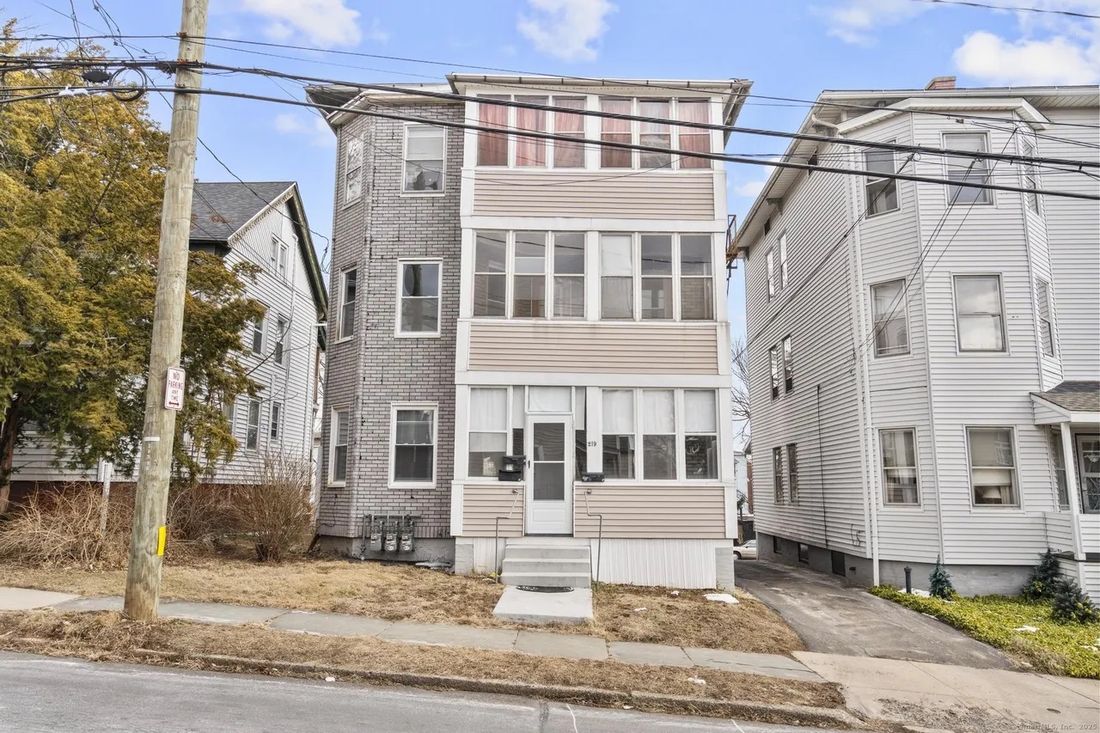
Here is one of the properties we have bought nearby, with the problems it came with. The full write-up shows how the title issues were cleared.