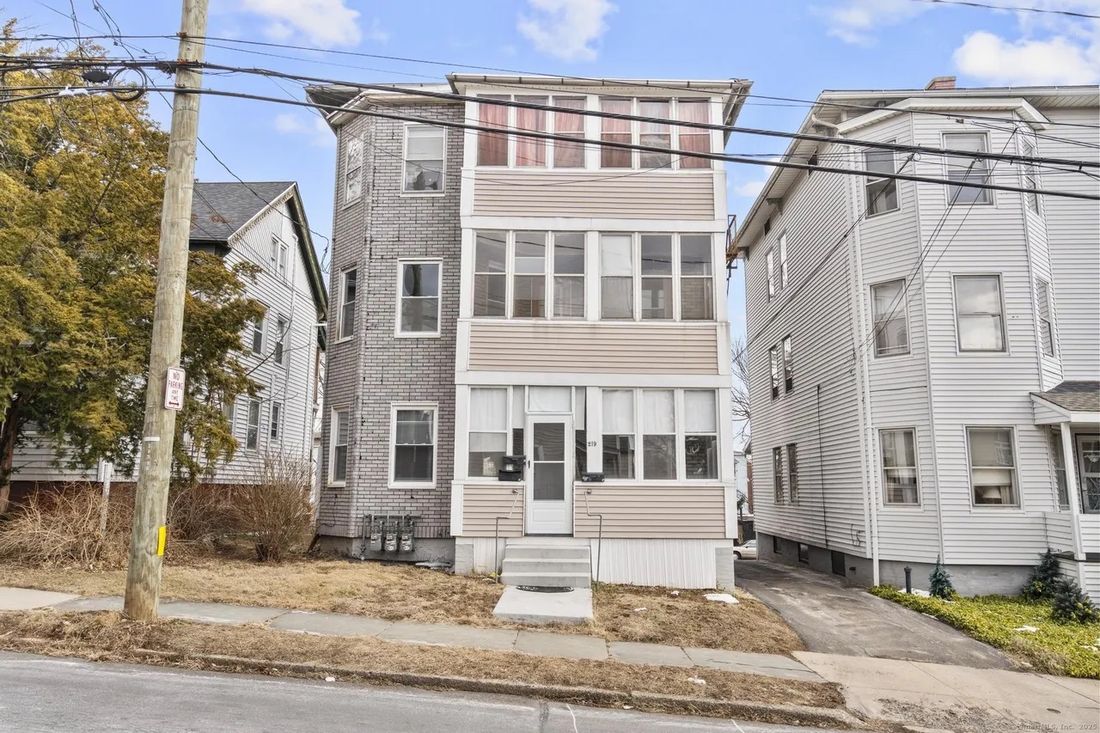
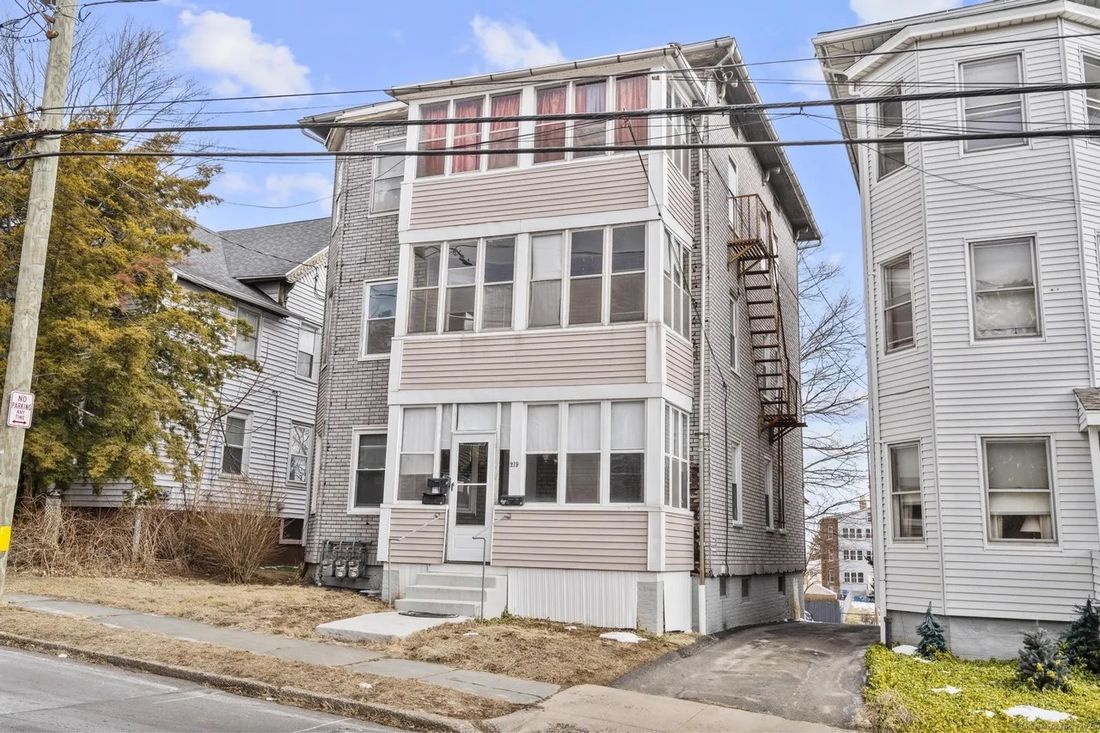
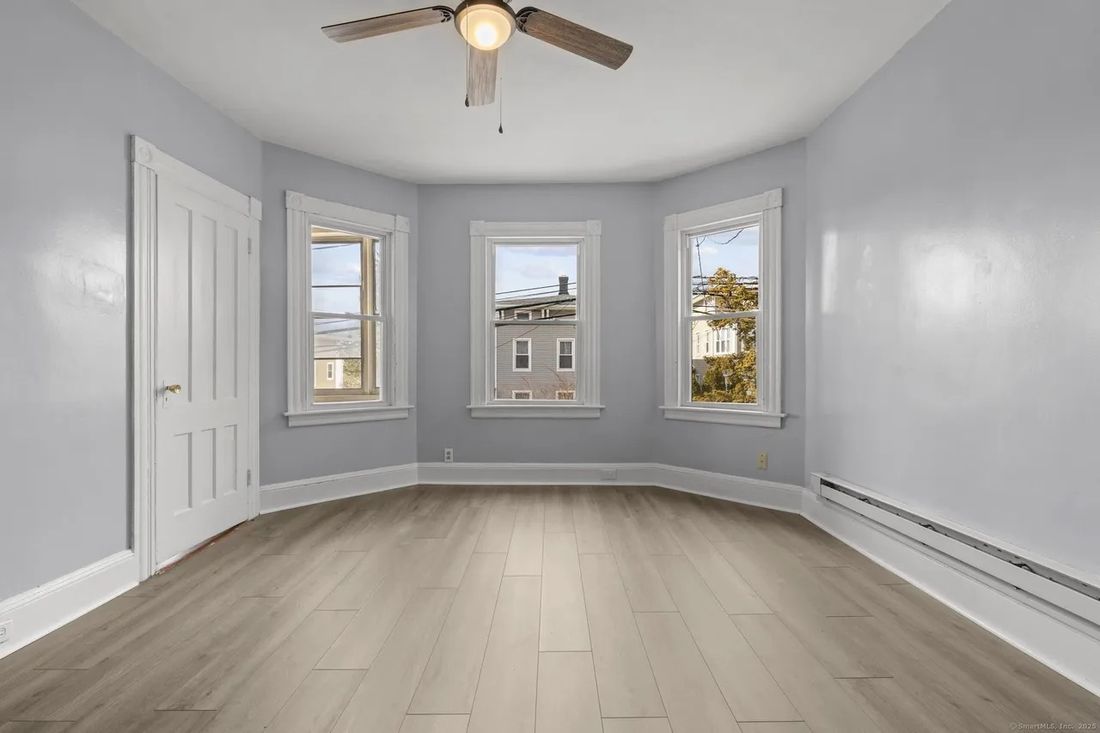
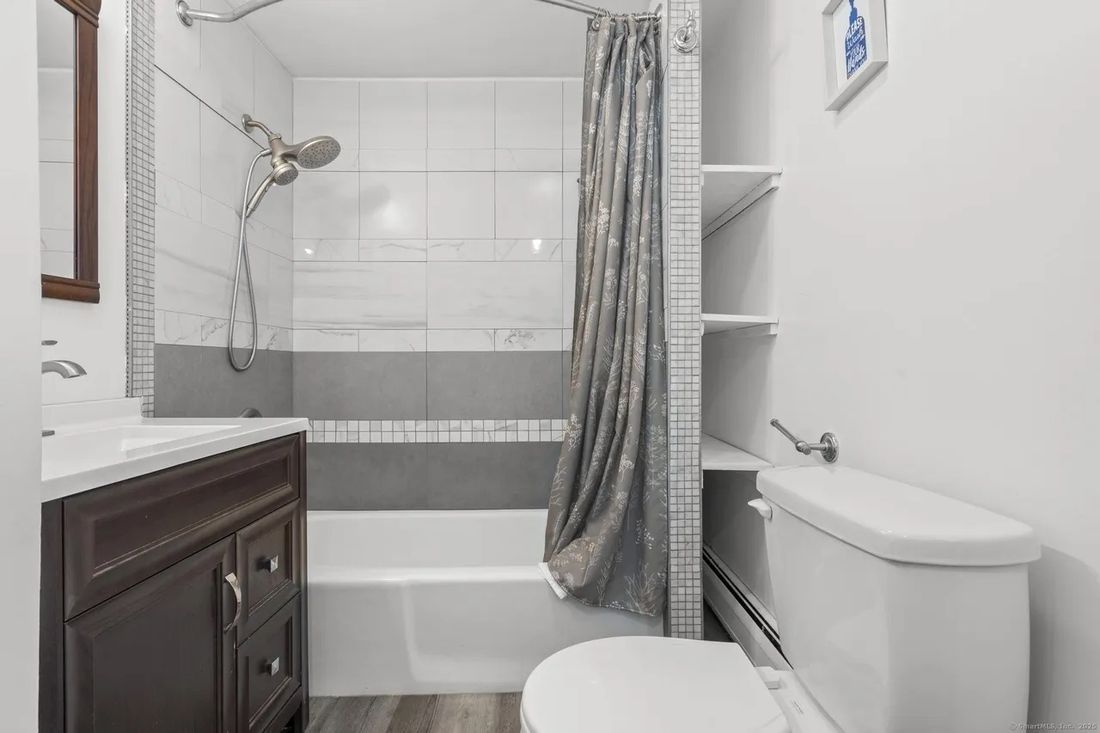
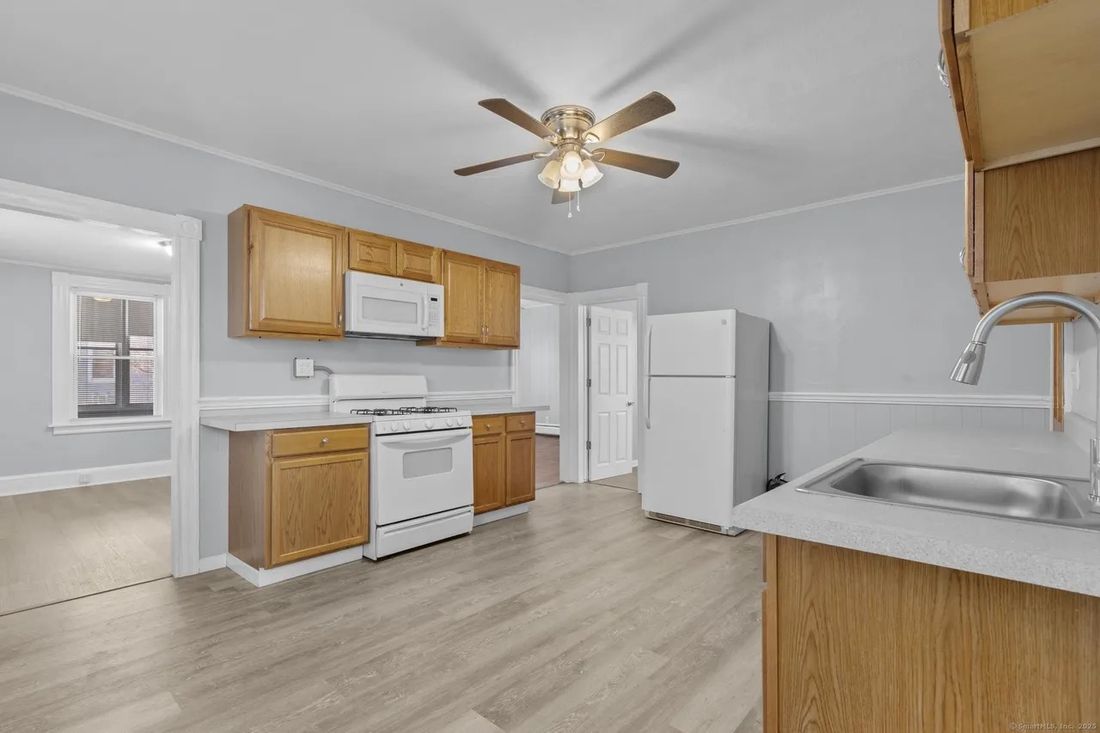
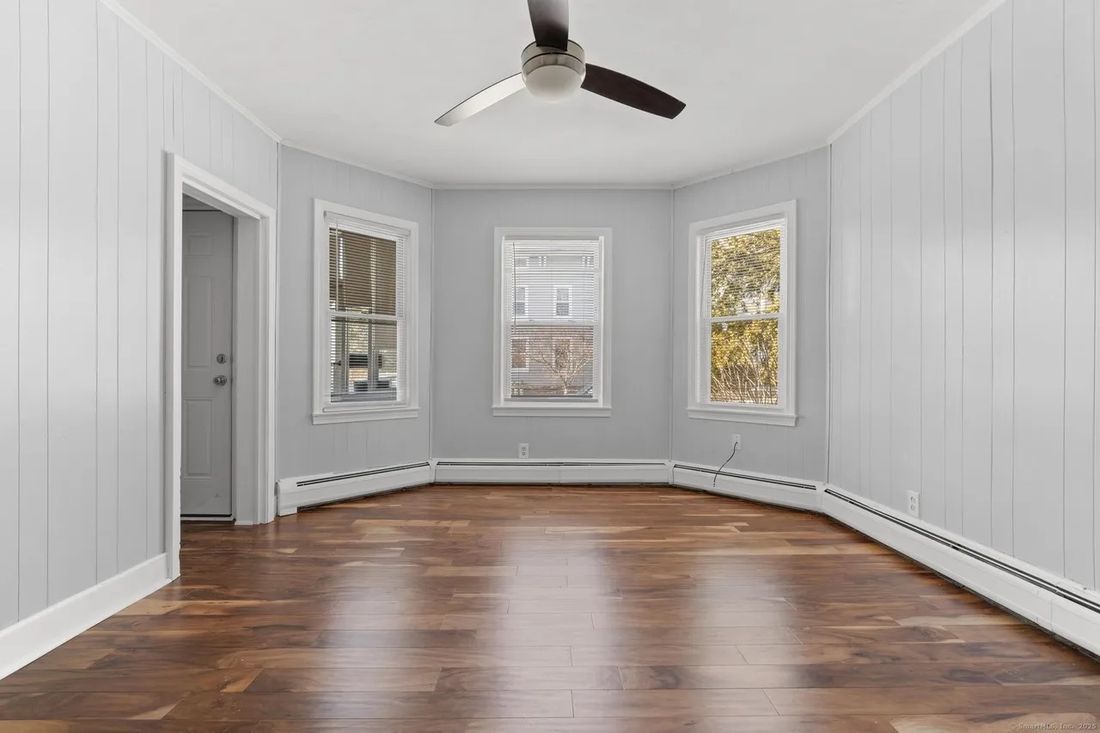
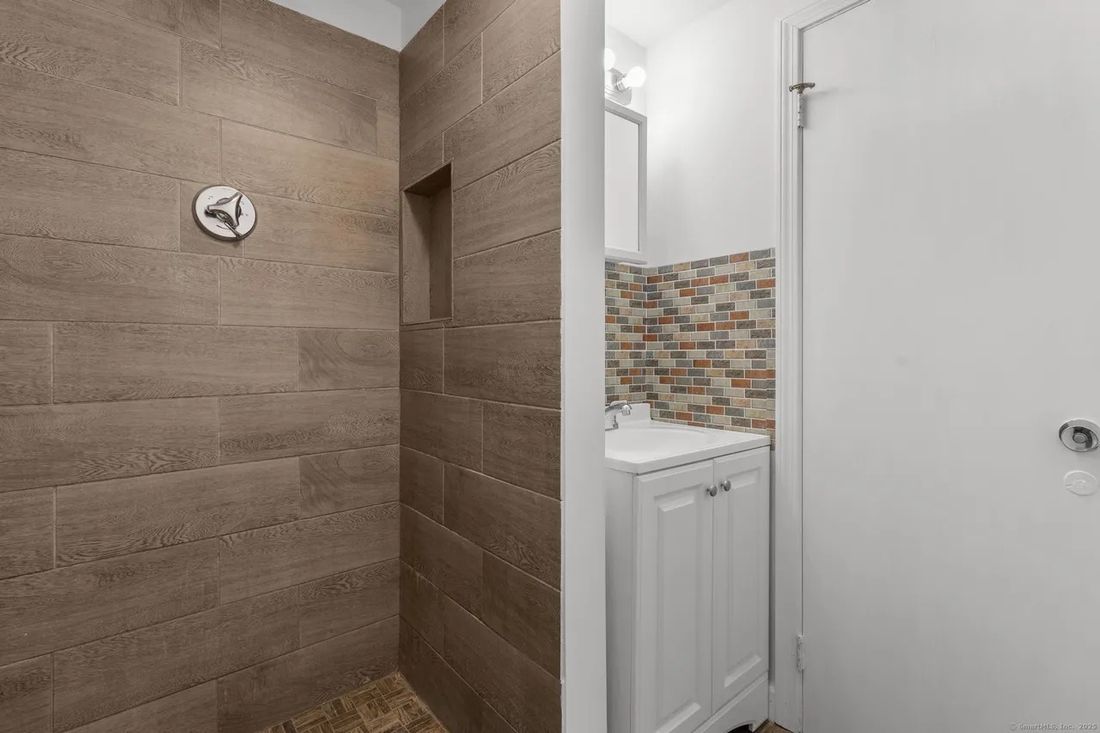
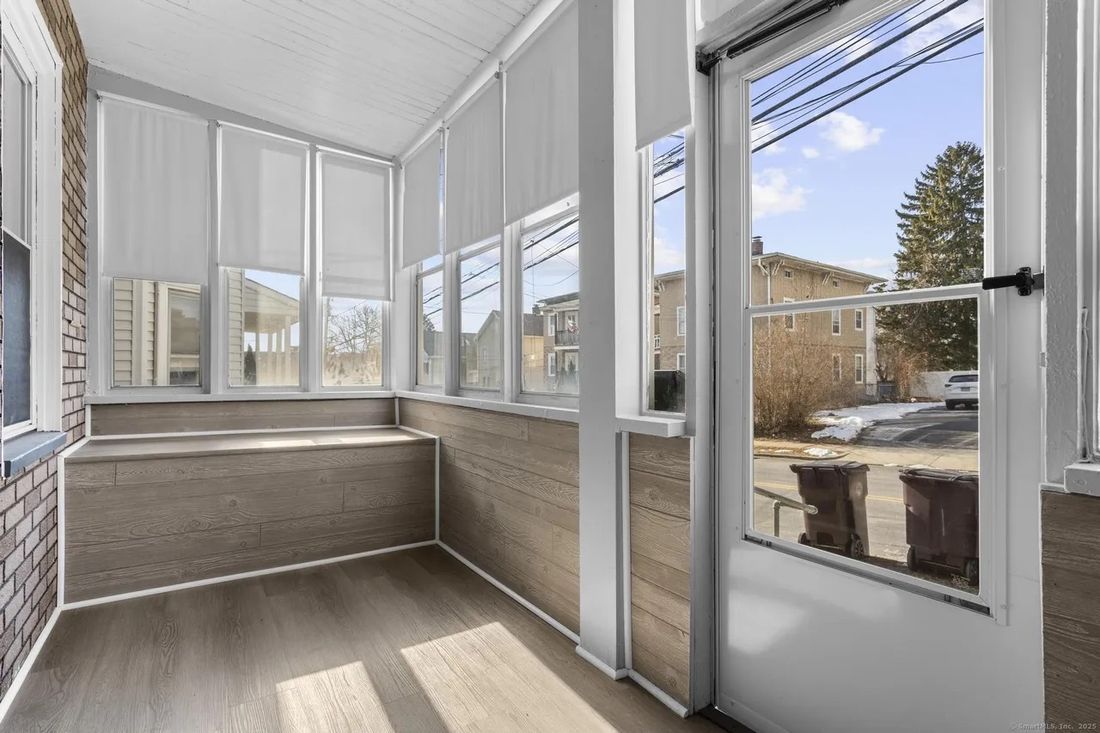
Curtis Street runs through the residential grid north of downtown New Britain, in the 06053 ZIP — the kind of block where three-story wood-frame multi-families have housed working families since the city's hardware-manufacturing years. This one is a triplex: three separate apartments stacked in a single building, each with its own kitchen, its own bath, and its own heat draw off a shared system in the basement.
Buildings like this are the backbone of New Britain's rental stock, and they are also where the city's toughest sales come from. They are old enough to have accumulated real title history. They are big enough that deferred maintenance compounds across three units instead of one. And they usually come with people living in them, which changes everything about how a sale has to be structured.
When this one came to us, it had one month-to-month tenant in place and two apartments sitting empty.
That occupancy split — one paying unit, two vacant — is one of the hardest positions a small landlord can be in. The building still costs what it costs. Property taxes, insurance, and heat on a three-unit structure do not scale down because two-thirds of it is empty. Meanwhile the income covering those costs has been cut to a third.
The obvious fix is to fill the vacancies. But filling two units in a building you are trying to exit means turning both apartments, marketing them, screening applicants, and signing leases that a future buyer may or may not want to inherit. You spend money and take on obligations to make a property more sellable, and then you sell it and never see the return.
The seller also had a practical constraint that mattered more than it sounds: work travel. A conventional Connecticut closing is not a single appointment. It is an inspection window, an appraisal, a title search that may surface surprises, a walkthrough, and a closing date that moves. Coordinating all of that from the road, across time zones, is genuinely difficult — and every delay costs another month of carrying an under-occupied building.
Before any of the physical condition mattered, the title had to be made insurable. This property carried two separate defects, and they came from opposite directions.
The land records still showed an old mortgage that had never been formally released. This is far more common than most owners realize, and it almost always comes as a surprise — because nothing about it is visible until someone runs a title search.
A mortgage gets paid off. The lender is supposed to record a release on the town land records showing the debt satisfied. Sometimes they simply never do. Sometimes the release is recorded with a wrong volume and page number, or against a slightly wrong legal description, and it never attaches to the right parcel. And sometimes the original lender has been through three mergers since, so the entity that owes you a release no longer exists under that name.
Whatever the cause, the effect is the same: on paper, the debt is still alive. No title insurer will write a policy over it, and no lender will fund a purchase without that policy. Resolving it means identifying the successor institution, proving the loan was satisfied, and getting a corrective release recorded — a process measured in weeks, not days.
The second cloud was owed to the City of New Britain. In Connecticut, unpaid municipal taxes attach as a lien against the real estate itself rather than following the person who incurred them. The obligation travels with the parcel. A buyer who takes title without addressing it takes the lien too.
That means the amount has to be identified precisely, quoted as a payoff figure that stays good through the closing date, and satisfied out of proceeds at the table. It is not complicated work, but it is exacting work, and it has to be sequenced correctly with everything else.
A financed buyer cannot close over an unreleased mortgage or an unpaid municipal lien — their lender requires clear, insurable title, full stop. When a title search surfaces something like this two weeks before closing, the deal does not usually survive it. The buyer's rate lock expires, their patience runs out, and the property goes back on the market with days-on-market already accumulated. We priced both defects into our offer and cleared them ourselves.
The occupied unit had a month-to-month tenant. To a retail buyer, that is ambiguity — and ambiguity is what kills financed offers on small multi-family.
An owner-occupant buyer wanting to live in one unit needs to know when they can actually move in, and in Connecticut ending a tenancy is a legal process, not a conversation. It requires a properly served notice to quit, and if the tenant does not leave voluntarily, a summary process action through housing court. That takes time and can be contested. No buyer wants that uncertainty attached to their mortgage commitment.
An investor buyer has the opposite concern: they want the income, but they want documentation — a signed lease, a payment history, a security deposit properly accounted for. Connecticut law requires security deposits to transfer to the new owner at closing, and the new owner inherits the obligation to return them. Undocumented deposits become the buyer's liability.
We did not need any of that resolved before closing. We buy tenant-occupied buildings routinely, we take the tenancy as it stands, and we handle the deposit accounting and the tenant relationship ourselves after we own it. For the seller, that removed an entire category of pre-sale work — no notice to quit, no vacancy push, no reconstructing a paper trail.
Rather than asking the seller to be in Connecticut on a date set by the closing attorney, we arranged a pre-signing. The documents were prepared and executed in advance, so the closing could be completed while the seller was traveling.
This sounds like a small accommodation. In practice it is often the difference between a deal closing and a deal dying, because the alternative is a chain of rescheduled dates that eventually exhausts everyone.
The deal closed. We took over the utilities. And within days, a severe cold snap hit hard enough to freeze and burst two radiators inside the building.
Anyone who has owned older multi-family in Connecticut knows this specific failure. These buildings run hydronic heat — water circulating through cast-iron radiators. When a vacant unit loses heat during a deep freeze, the water inside those radiators expands as it turns to ice and splits the iron. The split does nothing while everything is frozen. Then it thaws, and every crack becomes an open tap running at system pressure into a building nobody is standing in.
What saved this property was timing. Our cleanout contractor arrived while the water was still running and shut it down at the main. A few more hours and this would have been a different project entirely — saturated ceilings through three floors, ruined framing, and a mold remediation job layered on top of everything else.
If you own a vacant or partially vacant property in Connecticut through the winter, the single most expensive mistake you can make is letting the heat lapse — or letting a utility account close during a transfer. Many vacant-property insurance policies exclude freeze damage outright when heat has not been maintained, which means the loss is yours. If a building will sit empty, either keep it heated and checked, or have the plumbing properly winterized and drained.
None of that reached the seller. Once we closed, the building's problems were ours — including the ones that had not happened yet when they signed.
Honestly? Eventually, probably — at a price, and after a great deal of work. It is worth walking through what that path would actually have required, because the comparison is the whole point.
First, the title defects would have had to be cleared before listing, or disclosed and cleared during escrow while a buyer waited. Second, the tenancy would have had to be resolved or documented well enough for a lender. Third, the two vacant units would have needed to be presentable — which at minimum means a cleanout, and realistically means paint and flooring. Fourth, the seller would have needed to be personally available for inspections, appraisal access, negotiation and closing, from the road.
Then subtract the costs: agent commission on both sides, seller-paid closing costs, concessions after inspection, and several more months of taxes, insurance and heat on a building generating one-third of its potential income. And carry the risk that a financed buyer walks after the inspection, and you start again with stale days-on-market.
A direct sale is not automatically the right answer for every owner. If your building is clean, fully occupied with documented leases, and you can carry it comfortably for six months, listing it will usually net you more. That is a genuinely fair statement, and we would rather you hear it from us. Our side-by-side comparison of selling to us versus listing with an agent lays out both columns without spin, and our blog post on selling as-is versus renovating first works through the math in detail.
But when the title is clouded, the occupancy is mixed, the mechanicals are aging, and you cannot be physically present to manage a retail process — the calculation changes. That was this building.
New Britain has one of the densest concentrations of two-, three- and four-family housing in Greater Hartford. Much of it is aging into exactly this profile: long-held buildings with original heating systems, partial occupancy, deferred maintenance, and land records nobody has examined in decades.
There is also a lead-paint dimension that owners of these buildings should not overlook. New Britain's multi-family stock is overwhelmingly pre-1978, which brings federal disclosure obligations on sale and additional rules where young children are present. Our guide to selling a pre-1978 house with lead paint in the Hartford area covers what you are actually required to do.
If you are weighing a sale, the questions worth asking yourself are the ones that determine whether a retail listing is realistic at all:
If several of those give you pause, a direct cash sale deserves a real look. We buy tenant-occupied rental property throughout Hartford County, we close over tax liens and other title defects, we buy buildings needing serious work, and we handle inherited and estate property without asking the seller to do the cleanup first. If a lender is already involved, our walkthrough of the Connecticut foreclosure process explains where your options narrow and where they do not.
For deeper reading on this specific situation, our guide to selling a tenant-occupied multi-family in Hartford covers leases, deposits and notice requirements, and the Hartford County tax foreclosure guide explains how municipal liens escalate if left alone. For pricing context, see our 2026 Hartford market breakdown.
New Britain is one of our most active markets for multi-unit property, but the same situations show up across the region. We buy two-, three- and four-family buildings in New Britain, Hartford, East Hartford, West Hartford, Newington, Bristol, Wethersfield, Rocky Hill, Farmington, Manchester, Windsor, Bloomfield, South Windsor, Glastonbury and Enfield. The full list is on our locations page.
Want to see the process before you commit to anything? Here is how it works, what sellers say about working with us, and who we are.
Yes. A tenancy does not have to end before a sale — the buyer simply takes title subject to the existing tenancy. What changes is who is willing to buy. Many owner-occupant buyers want vacant possession, which means ending the tenancy first through a formal notice to quit and, if necessary, a summary process action. We buy tenant-occupied buildings as they are, so no notice needs to be served and no unit needs to be emptied before closing.
An existing lease generally survives the sale and binds the new owner for the remainder of its term. Month-to-month tenancies continue as well until properly terminated. Connecticut law requires security deposits to be transferred to the new owner at closing, and the new owner becomes responsible for returning them. This is why documentation matters — if deposits were collected but never properly tracked, that becomes a real liability. When we buy, we handle the deposit accounting and take over the tenant relationship directly.
The lien has to be resolved at or before closing, but not necessarily out of your pocket beforehand. In Connecticut, unpaid municipal taxes attach to the property itself rather than to you personally, so they travel with the parcel until satisfied. In a normal sale the payoff comes out of your proceeds at the closing table. If the lien exceeds your equity the situation gets more complicated, and it is worth a conversation before you list. We regularly close on properties with outstanding municipal balances and coordinate the payoffs ourselves.
It is an old mortgage that was paid off but never formally released on the land records, so the debt still appears to exist on paper. Owners almost never know about it, because nothing surfaces until a title search is run — often years later, during a sale. Causes include a lender that never filed the release, a release recorded with an incorrect legal description, or an originating lender absorbed through mergers. Clearing it means locating the successor institution, proving satisfaction, and recording a corrective release, which typically takes weeks.
You can sell it to a cash buyer who is willing to take on the defect. You generally cannot sell it to a financed buyer, because their lender requires clear, insurable title before funding. That is the practical dividing line. Title problems are the single most common reason a retail multi-family deal collapses late — the search comes back mid-escrow, the buyer's timeline cannot absorb the delay, and the property returns to market with days on market already accrued.
It becomes a material change in condition, and in a financed transaction it usually stops the deal until repairs are made and re-inspected. The bigger risk is insurance: many vacant-property policies exclude freeze damage when heat has not been maintained, which can leave the loss entirely on you. If your building will sit empty through a Connecticut winter, either keep heat on and have it checked periodically, or have the plumbing properly winterized and drained. In our case the freeze happened after we had closed, so the cost was ours rather than the seller's.
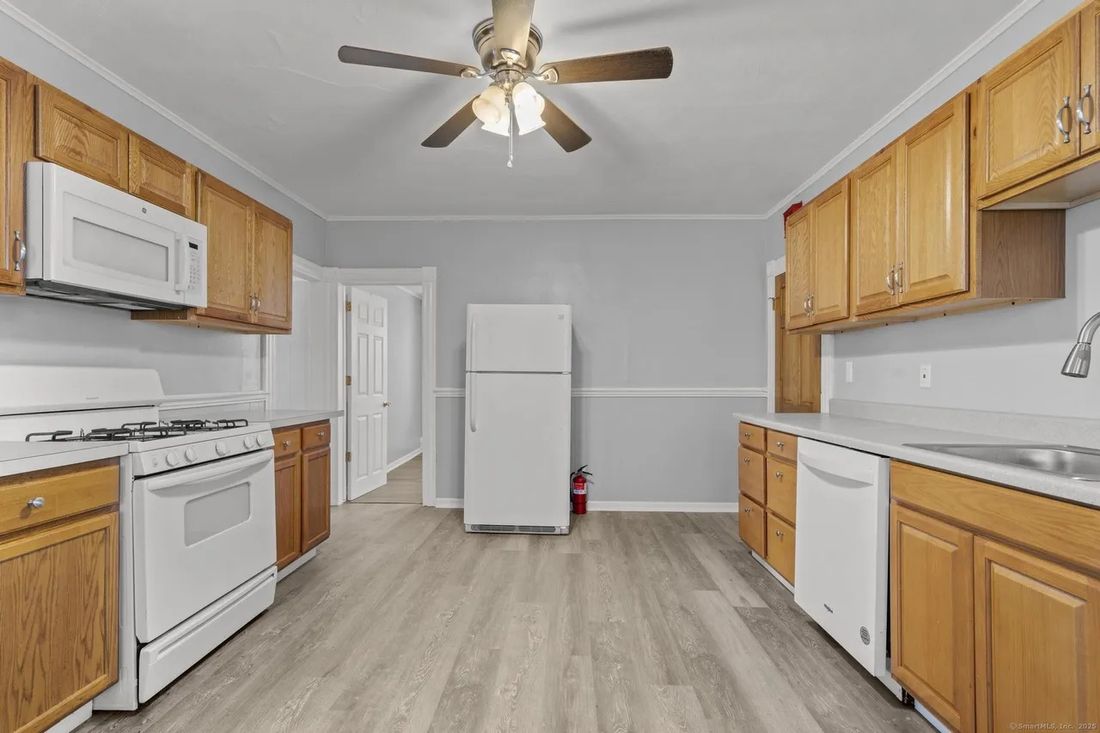
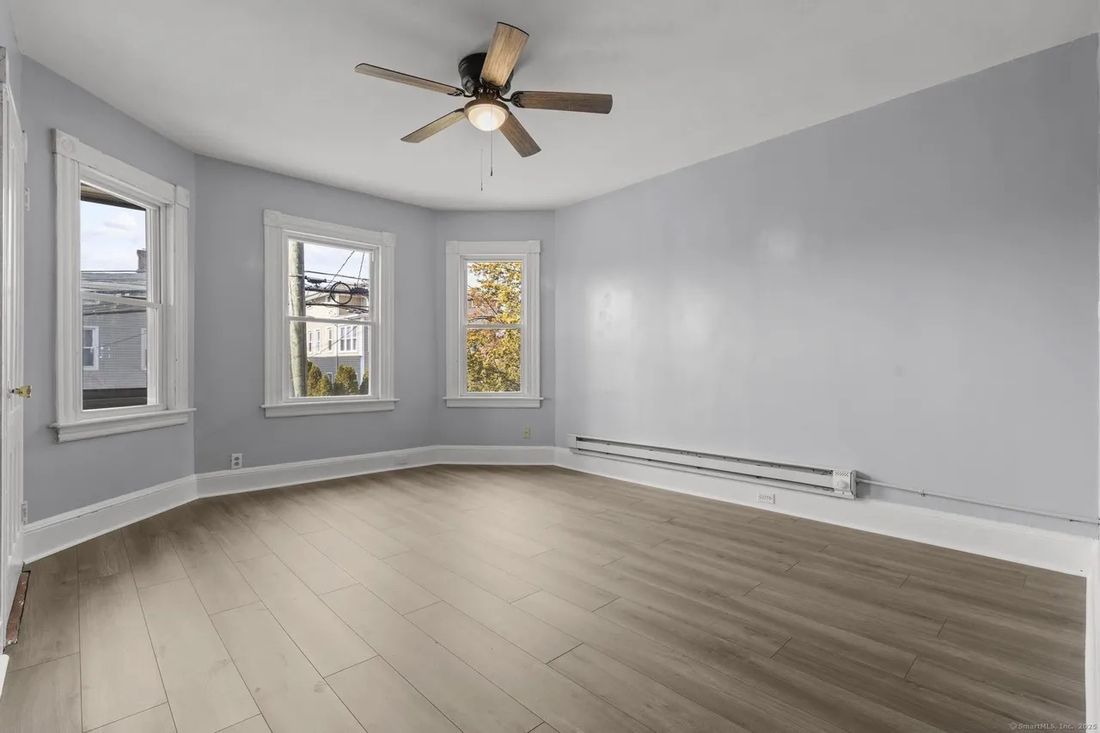
No. You can leave behind furniture, appliances, tenant belongings, construction debris — whatever is there. We handled a complete cleanout of two units on this property, along with radiator replacement, furnace service, water damage drying, and cosmetic work across all three apartments. Removing that work from the seller's plate is a large part of what a direct sale is actually for.
We can typically make an offer within 24 hours of seeing the property and close in as little as seven days when title is clean. When there are complications — an unreleased mortgage, municipal liens, probate, or an estate — the timeline is driven by how fast those can be resolved, which is usually a few weeks rather than a few days. We can also close slower on purpose if you need time to relocate or coordinate around travel, as we did here.
No. There is no agent commission because no agent is involved, no listing fees, and we cover standard closing costs. The number we agree on is the number you receive. There are no repair credits negotiated after an inspection, because our offer already accounts for the property's condition.
We start from what the building would be worth repaired and stabilized in its specific New Britain submarket, then subtract the cost of getting it there — repairs, cleanout, mechanical work, carrying costs, title clearing, and our margin. On a multi-family we also weigh occupancy, the quality of the existing leases, and how much of the rent roll is currently real versus theoretical. We walk sellers through those numbers rather than just handing over a figure, so you can see exactly why the offer is what it is.