Behind on Property Taxes in Hartford? Here Is How Connecticut Collects Them
Connecticut has no county government, so there is no county treasurer and no county tax sale. Your property tax is billed and collected by your own city or town. In Hartford that is the Office of the Tax Collector at City Hall, 550 Main Street. In West Hartford, East Hartford, Wethersfield, or Bloomfield it is that town's collector. Each one follows the same state law, found in Title 12 of the Connecticut General Statutes, but each decides for itself when and how hard to push on an overdue account.
That local control cuts both ways. A collector may let a balance ride for a long time and then move all at once, through a tax sale, a court foreclosure of the lien, or a sale of the lien to a private company. If you have equity in the house, the goal is to deal with the debt while you still choose how it gets paid.
Three Ways a Connecticut Town Can Enforce an Unpaid Tax
The collector's tax sale (§ 12-157)
The collector gives written notice to the owner and to everyone with a recorded interest, such as your mortgage lender, and advertises the sale. On sale day the property is auctioned. The buyer does not get the house right away. You then have six months to redeem by paying the buyer the purchase price plus interest at 18% a year and certain costs. If you redeem, the sale is undone. If the six months pass without redemption, the collector's deed becomes final and the house belongs to the buyer.
Foreclosing the lien in court (§ 12-181)
A town can also bring a foreclosure lawsuit in Superior Court on its tax lien, much like a mortgage lender would. The judge can order a strict foreclosure with a Law Day or a foreclosure by sale. You can pay the taxes, interest, and the town's legal fees up to that deadline. Court fees and attorney fees added to the account can make this route more expensive than the tax itself.
Selling the lien to a private company (§ 12-195h)
Many Connecticut towns, Hartford among them in past years, have sold batches of tax liens to outside investors. The buyer of the lien steps into the town's shoes. It must notify you and your mortgage lender within 30 days of the assignment, and from then on you pay that company, not City Hall. Lien buyers can add interest, collection costs, and attorney fees, and they can foreclose. Owners are often surprised by how quickly the balance grows once a lien has been sold, so get a written payoff as soon as you receive an assignment letter.
Where You Still Have Choices
Until the redemption period ends after a tax sale, or until the Law Day or auction in a lien foreclosure, the house is still yours. You can pay the taxes. You can refinance if your credit allows. And you can sell, with the tax payoff and any mortgage paid from the sale price at closing. Once title passes, those options are gone, and so is any equity you were counting on.
Hartford has one of the highest mill rates in Connecticut, so a modest assessment can still produce a large yearly bill, and 18% interest compounds the problem. When the back taxes have grown larger than you can catch up on, a sale that pays them in full is often the way to keep the rest of your equity.
After Tyler v. Hennepin: What Happens to Surplus Money
In 2023 the U.S. Supreme Court ruled in Tyler v. Hennepin County that a government cannot keep more than the tax debt when it takes and sells a home for unpaid taxes. Keeping the extra value is a taking under the Fifth Amendment. Connecticut's tax-sale statute already provides for excess sale proceeds to be held for the owner and lienholders, but a claim has to be made within a short deadline, generally 90 days after the sale. Even when the process works perfectly, a surplus from an auction is usually less than what the house would bring in a normal sale. Selling before the auction is the more reliable way to keep your equity.
Water and Sewer Charges Can Become Liens Too
In Hartford and several neighboring towns, water and sewer service comes from the Metropolitan District (MDC), not the city. Unpaid MDC charges can also be recorded as a lien on the property, and they show up in the title search alongside the property taxes. Owners who have fallen behind on one bill are often behind on the other, especially on an older multi-family where the owner pays the water for every unit. When you call us, mention any utility balances you know about. The closing attorney will get payoff figures for those as well, so nothing is left hanging after the sale.
The same goes for anything else the city has billed to the property, such as charges for boarding up a vacant building or clearing a lot. If it is recorded against the land, it gets paid from the sale and released.
Ways to Catch Up Without Selling
If you want to keep the house and the numbers allow it, start with these. Each depends on the town and your circumstances, so ask before you assume.
Many Connecticut collectors will accept a written payment arrangement on a delinquent account, especially from an owner who calls before enforcement starts. Interest keeps running while you pay, so ask for the full payoff schedule in writing. Hartford's collector can be reached at (860) 757-9630.
Every Connecticut town offers the state's Homeowners' Elderly/Disabled Tax Relief program, often called the circuit breaker. It is for owners 65 or older, or totally disabled, under income limits the state updates each year. You apply with your town assessor between February 1 and May 15, and the credit comes off your tax bill. Approved owners reapply every other year.
Veterans, surviving spouses, and owners with certain disabilities may qualify for exemptions that lower the assessment. Some towns add their own senior relief on top of the state program. The assessor's office can tell you what applies and when to file.
If you believe your assessment is too high, each town has a Board of Assessment Appeals with a yearly filing deadline. A lower assessment will not erase past taxes, but it can keep the problem from growing.
Chapter 13 bankruptcy is another tool. The automatic stay stops a pending tax sale, and the plan can spread the overdue taxes over three to five years. It has real costs and lasting credit effects, so talk to a Connecticut bankruptcy attorney before you file.
Selling a House With a Tax Lien: How the Closing Works
You do not need to clear the lien before you call us. In Connecticut a licensed attorney handles the closing, and paying off liens is a routine part of that job.
- We make an offer on the house itself. The price is based on the property and its condition. The tax balance comes out of the price; it does not change what the house is worth.
- The closing attorney searches the title. The search shows every recorded claim: the tax lien or certificate, any lien that was sold to a private company, your mortgage, sewer or water liens, and judgment liens.
- Payoff letters are ordered. The attorney gets an exact figure from the Hartford collector or the lien holder, good through the closing date, so interest is accounted for to the day.
- Everything is paid from the sale. On closing day the attorney pays the taxes and every other lien from the proceeds, and the remainder is paid to you.
- Releases are recorded. The collector or lien holder releases the lien on the land records, and the tax problem is closed for good.
We can schedule closing in as little as seven days if title is clear, or later if you need time to move. If a tax sale date has been set, tell us on the first call so we can plan the closing around it.
Tax Help in Hartford
City of Hartford Tax Collector
550 Main St, Room 106, Hartford, CT 06103 · (860) 757-9630 · hartfordct.gov
Balances, payoff figures, and payment questions for Hartford parcels. Other towns have their own collector.
Your Town Assessor
Applications for the elderly and disabled homeowners' program (February 1 to May 15), veterans' exemptions, and assessment questions.
CT Department of Revenue Services
portal.ct.gov/DRS
Information on the state income tax credit for property taxes paid, which is limited to certain filers.
Greater Hartford Legal Aid
(860) 541-5000 · ghla.org
Free civil legal help for lower-income residents and seniors in the Hartford area.
Why Owners With Back Taxes Work With Simply Sold RE
Frank Sanchez and Larry Friedman buy houses across Greater Hartford with tax problems attached: years of unpaid bills, liens sold to private companies, water and sewer charges, and houses that need more work than the owner can afford. We do not ask you to pay anything down first, and we do not charge commissions or fees. You get one written number showing the price, what goes to the town, what goes to any lender, and what comes to you.
Call (860) 703-9997. If a payment plan or a relief program will solve it, we will say so.
Got a Tax Sale Notice?
Send us the address and the sale date. We will show you what the back taxes cost at closing and what is left for you.
A Purchase With City Tax Liens on Title
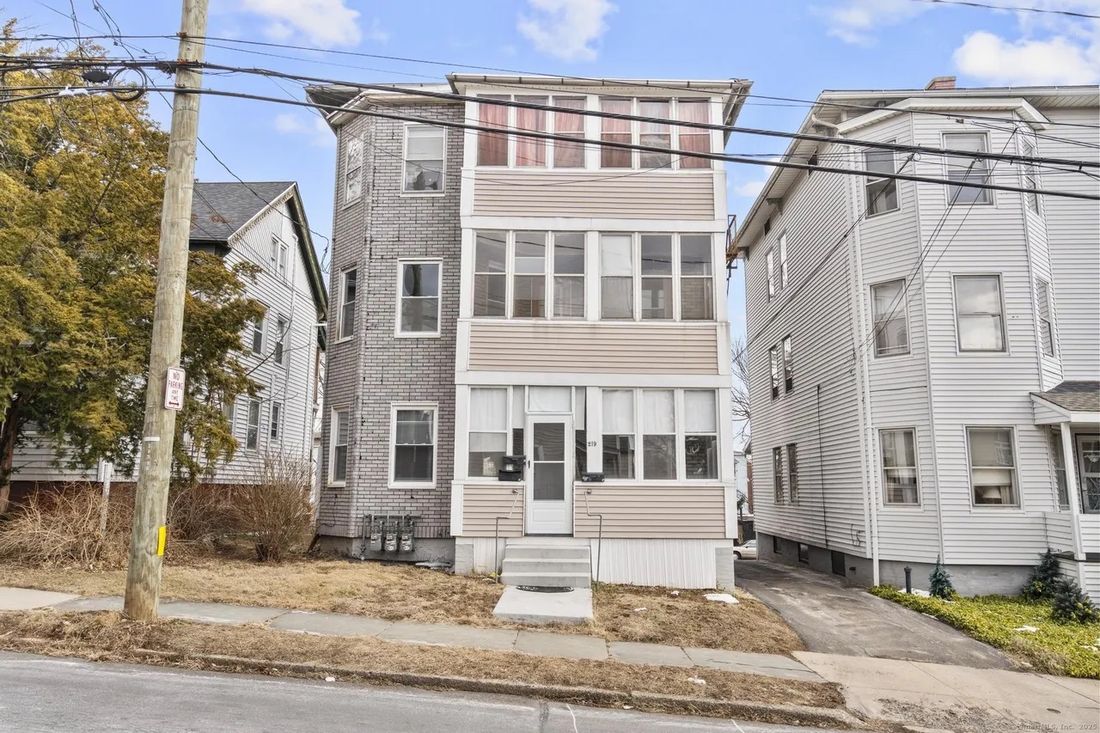
This New Britain three-family came to us with unpaid municipal taxes recorded against it. Here is how the liens were paid and released at closing.