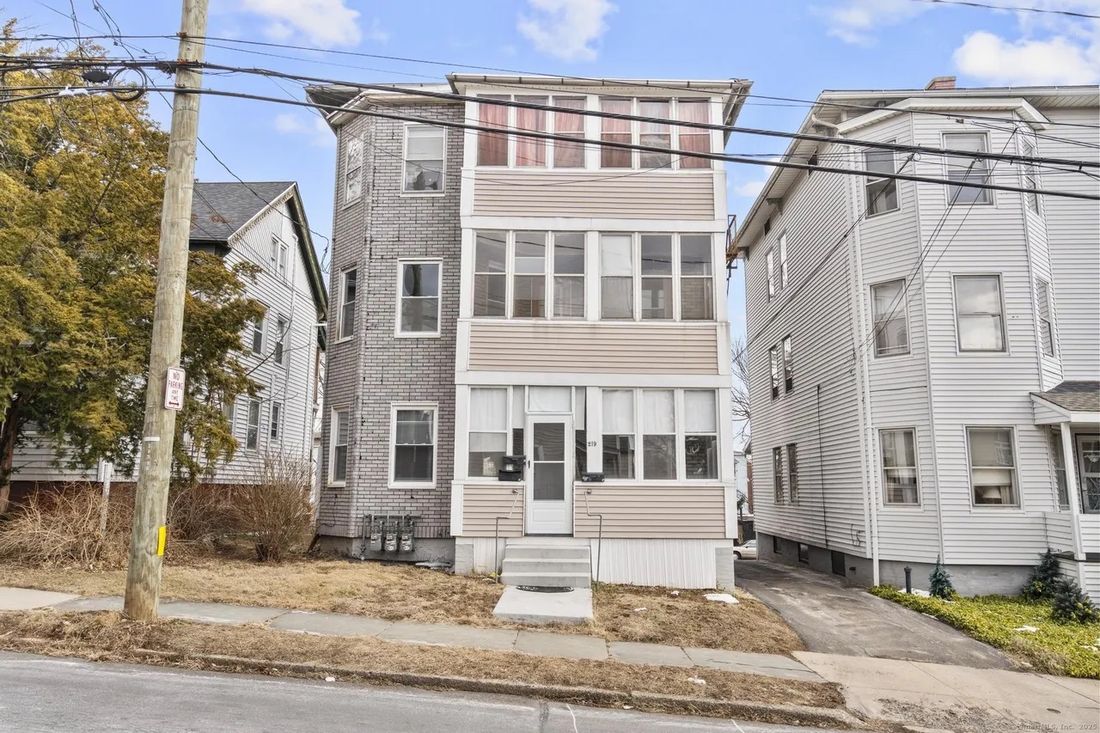
Selling a Hartford Rental: Tenants, Deposits, Taxes, and Timing
Hartford is a city of renters. Most households here rent, and a large share of the rentals sit in the buildings that define the city's older neighborhoods: wood three-deckers and two-families in Frog Hollow, Parkville, Barry Square, and the South End, and the six-unit "perfect six" houses, three stories with stacked bow-front porches, found in Frog Hollow and Asylum Hill. Many of those buildings are owned by one person or a family, sometimes for decades. If you own one and you are ready to be done, this page covers the Connecticut rules that shape a rental sale and how we handle each of them.
Three questions come up on almost every call: what happens to the tenants, what happens to their security deposits, and how much of the sale goes to taxes. We take them in that order.
Your Tenants Come With the Building
A Connecticut lease does not end because the building is sold. The buyer takes the property subject to the existing tenancies, and the tenant keeps the same rent and terms until the lease runs out or is lawfully ended. When we buy, we become the landlord on closing day and pick up where you left off.
- Tenants with a lease. We honor it. The rent and the remaining term are part of how we price the building, so a lease is not a problem for us.
- Month-to-month tenants. They stay, too. Any later change to the tenancy is our job after closing, handled under Connecticut law, and we would usually rather keep a good tenant than turn the unit.
- Older and disabled tenants in larger buildings. Under Conn. Gen. Stat. § 47a-23c, tenants who are 62 or older or who have a qualifying disability, living in a building or complex with five or more units, can only be evicted for specific good causes. If your building is that size, those protections pass to the new owner along with everything else.
- Telling the tenants. Connecticut does not require you to notify tenants before you sell, though some leases do. After closing, tenants need to know in writing who the new owner is and where to pay rent. We take care of that.
One practical point: in a Connecticut sale both sides have attorneys. Ask yours to prepare a rent roll and copies of every lease for the buyer. It speeds up the closing and avoids arguments later.
Security Deposits Under Conn. Gen. Stat. § 47a-21
Connecticut's deposit law is strict, and a sale is the moment old mistakes come to light. The key rules:
- Limits. A landlord may collect no more than two months' rent as a deposit, or one month's rent for a tenant 62 or older.
- Escrow. Deposits must be placed in an escrow account, separate from the landlord's own money.
- Interest. Landlords owe tenants interest on deposits each year at a rate tied to the state's published deposit index.
- On a sale. The selling landlord must turn the deposits and the interest earned over to the new owner, and the new owner becomes responsible for returning them when each tenant moves out.
- At move-out. The landlord has 21 days after the tenancy ends, or 15 days after getting the tenant's forwarding address in writing if that is later, to return the deposit with interest or give an itemized list of damages. Missing that deadline can cost twice the deposit.
Before closing, pull together what each tenant paid, when they paid it, and what interest you have paid since. If records are missing, tell us. We would rather sort it out at the closing table with a credit than have a former tenant come back to you later.
How Eviction Works in Connecticut (Summary Process)
Connecticut calls an eviction a summary process action, and it follows a set order. In Hartford these cases are heard in the Housing Session of the Superior Court at 80 Washington Street. Here is the sequence for a nonpayment case:
| Stage | The Rule | Where People Slip |
|---|---|---|
| Grace period | Monthly rent is not late for eviction purposes until nine days after it is due (§ 47a-15a) | Serving notice before the grace period ends can get the case dismissed |
| Notice to Quit | Served by a state marshal, giving at least three full days to leave | Since October 2021 it must include the state's Right to Counsel notice |
| Summons and complaint | Filed after the quit date passes, with a return date | The Right to Counsel notice goes with these papers too |
| Court date | Housing Session hearing; a housing mediator usually meets the parties first | Many cases end in a stipulated agreement with a move-out date |
| Judgment and stay | Automatic five-day stay, not counting Sundays and legal holidays | Tenants can apply for a longer stay in some cases |
| Execution | A state marshal serves the execution and carries out the removal | Landlords may not change locks or remove belongings themselves |
Cases for reasons other than rent, such as lease violations, usually require a written notice giving the tenant a chance to fix the problem before a Notice to Quit can be served. An uncontested case can be over in weeks. A case where the tenant has a lawyer, raises defenses about repairs, or asks for a stay can take much longer. Filing fees, marshal fees, and lost rent add up either way.
You do not have to finish any of this to sell to us. We buy buildings with a case already filed, with a tenant who has stopped paying, or with a unit that needs a cash-for-keys conversation. We pick it up after closing.
When the Problem Is the Building, Not the Tenant
Plenty of Hartford landlords are not fighting with anyone. They are worn down by a building that keeps asking for money: a boiler near the end of its life, an oil tank in the basement, porches on a three-decker that need rebuilding, knob-and-tube wiring, or lead paint in a house built long before 1978. Federal law requires a lead disclosure on the sale of pre-1978 housing, and the attorneys handle that form at closing.
We buy rentals as they are. We do not ask for repairs, a cleanout, or vacant units. One walk-through is usually all we need, scheduled around the tenants with proper notice, so there is no string of showings and no open houses in someone's living room.
Rent Rules That Affect What a Buyer Will Pay
Buyers look at current rents, not what a unit could rent for. Connecticut requires towns with more than 25,000 people to have a fair rent commission, and Hartford has one. A tenant can ask the commission to review a rent increase it considers unfair or to limit rent where there are code violations. If you have held rents low for a long-time tenant, a buyer should not assume those rents can jump overnight. We price based on the rents and the condition as they actually are, and we tell you how we got there.
The Tax Side of Selling a Rental
A rental is taxed differently from the home you live in. The main pieces:
Depreciation recapture
The depreciation you deducted over the years lowered your basis. When you sell, the part of your gain that comes from that depreciation is taxed federally at a maximum rate of 25%. It applies to a sale to anyone, including us, so plan for it.
Federal and Connecticut tax on the gain
Long-term gain above the recapture amount is taxed federally at 0%, 15%, or 20% depending on income, and higher earners may owe the 3.8% net investment income tax as well. Connecticut does not give long-term gains a lower rate. The gain is part of your Connecticut income and taxed at the state's regular rates, which top out at 6.99%. For a building bought decades ago, the combined bill can be large.
A 1031 exchange
If you want to stay invested, a Section 1031 exchange lets you defer the gain and the recapture by buying another investment property. You must use a qualified intermediary who holds the money between sales, identify replacement property within 45 days of your closing, and complete the purchase within 180 days. Connecticut follows the federal treatment. A landlord might trade a three-decker that needs constant attention for a newer building elsewhere, or for a property with a single commercial tenant. Line up the intermediary before you sign anything, because the exchange fails if the money passes through your hands.
Selling over time
An installment sale, where the buyer pays you over several years, spreads the gain across those years. It requires seller financing, so it does not fit a cash purchase. If it interests you, raise it with your accountant before you choose a buyer.
Landlord Resources in Hartford
Hartford Housing Session
80 Washington St, Hartford · (860) 756-7920 · jud.ct.gov
Summary process cases and housing mediators for Hartford properties.
State Marshal Commission
portal.ct.gov/smc
Find a state marshal to serve a Notice to Quit or carry out an execution.
Connecticut Statutes, Title 47a
cga.ct.gov
The landlord-tenant, security deposit, and summary process laws in full.
CT Department of Revenue Services
portal.ct.gov/DRS
Connecticut income tax and conveyance tax information for sellers.
Why Landlords Sell Their Buildings to Simply Sold RE
We own rentals too, so we know the calls at night, the tenant who is a month behind, and the repair that eats a year's profit. Frank Sanchez and Larry Friedman buy occupied buildings across Greater Hartford, from single-family rentals to three-deckers and small apartment houses, with the tenants and deposits handled at closing. You can close in a couple of weeks, or later if your accountant needs time. Call (860) 703-9997 and tell us about the building.
Ready to Hand Over the Keys?
Tenants in place, units empty, or a case in housing court. Send us the address and the rent roll and we will give you a number.
A Landlord Exit We Handled
This New Britain three-family had one tenant, two empty units, and an owner who traveled for work. Here is how the sale came together.